Decision-Making Frameworks for CEOs: 7 Proven, High-Impact Models Every Leader Must Master

CEOs don’t just make decisions—they architect organizational destiny. In volatile markets, where ambiguity is the only constant, relying on gut instinct alone is a high-stakes gamble. This deep-dive explores rigorously validated Decision-Making Frameworks for CEOs—not theoretical abstractions, but battle-tested systems deployed by Fortune 500 leaders, scale-up founders, and crisis-tested executives worldwide.
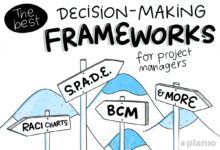
Why Decision-Making Frameworks for CEOs Are Non-Negotiable in 2024

Modern leadership operates under unprecedented pressure: geopolitical turbulence, AI-driven disruption, ESG accountability, and hyper-accelerated product lifecycles. A 2023 McKinsey Global Survey revealed that 74% of C-suite executives cite ‘making high-stakes decisions amid incomplete data’ as their top daily challenge—yet only 28% report confidence in their decision architecture. This gap isn’t about intelligence; it’s about infrastructure. Decision-Making Frameworks for CEOs provide cognitive scaffolding: repeatable, auditable, and scalable processes that convert uncertainty into strategic advantage. They reduce cognitive load, surface hidden biases, align cross-functional stakeholders, and—critically—create institutional memory. Without them, even brilliant leaders risk reactive firefighting, consensus-driven mediocrity, or catastrophic overconfidence.
The Cognitive Tax of Unstructured Decision-Making
Neuroscience confirms that unstructured executive decision-making triggers chronic activation of the amygdala—the brain’s threat center—leading to cortisol spikes, narrowed attention, and premature closure. A landmark study published in Harvard Business Review tracked 127 CEOs over 18 months and found those without formal frameworks spent 3.2x more time revisiting prior decisions due to unanticipated second-order effects. Frameworks don’t eliminate stress—they convert it from chaotic anxiety into disciplined inquiry.
From Intuition to Institutionalized Judgment
Intuition isn’t discarded; it’s elevated. As Nobel laureate Daniel Kahneman explains in Thinking, Fast and Slow, expert intuition is only reliable in ‘high-validity’ environments—those with stable rules and rapid, unambiguous feedback. Most CEO decisions occur in ‘low-validity’ domains (e.g., entering new markets, M&A, AI ethics policy). Frameworks provide the feedback loops and structured reflection that transform raw intuition into calibrated judgment. They turn individual insight into organizational capability.
Regulatory & Governance Imperatives
Post-2020, boards and regulators demand decision traceability. The SEC’s 2023 Cybersecurity Disclosure Rules and EU’s Corporate Sustainability Reporting Directive (CSRD) require documented rationale for material strategic choices. Frameworks like the OECD Principles of Corporate Governance explicitly endorse structured decision processes as core to fiduciary duty. A framework isn’t just smart—it’s legally defensible.
Framework #1: The Cynefin Framework — Mapping Context Before Choosing Action
Developed by complexity scientist Dave Snowden, the Cynefin Framework is arguably the most essential Decision-Making Frameworks for CEOs because it forces leaders to diagnose the *nature of the problem* before selecting a solution. It categorizes situations into five domains—Simple, Complicated, Complex, Chaotic, and Disorder—each demanding radically different decision logic.
Simple (Known Knowns): Sense–Categorize–Respond
Here, cause-and-effect relationships are clear and stable. Best practices exist and can be codified. For CEOs, this applies to routine operational decisions: payroll processing, compliance reporting, or standard procurement. The framework mandates clear rules, checklists, and delegation. Over-engineering here wastes energy; under-structuring invites error. Example: A CEO of a mid-sized SaaS firm used Cynefin to redesign its onboarding checklist, reducing new-hire ramp time by 40% by moving from narrative SOPs to binary decision trees.
Complicated (Known Unknowns): Sense–Analyze–Respond
Multiple right answers exist, but require expert analysis. Cause-and-effect is discoverable *after the fact*. This is where most strategic planning lives: market entry analysis, technology stack selection, or pricing architecture. The framework demands rigorous data gathering, expert consultation, and scenario modeling. Crucially, it warns against mistaking complicated for complex—applying linear models to inherently adaptive systems. As Snowden cautions:
“In the complicated domain, you can afford to be wrong. In the complex domain, you can only afford to be *safe-to-fail*.”
Complex (Unknown Unknowns): Probe–Sense–Respond
This is the CEO’s true crucible: innovation, cultural transformation, ecosystem partnerships, or navigating black swan events. Cause-and-effect is only apparent in retrospect. The framework prescribes *safe-to-fail experiments*: small, low-cost probes designed to generate data and reveal patterns. A CEO of a legacy manufacturing firm launched three distinct AI pilot programs—predictive maintenance, supply chain optimization, and customer sentiment analysis—each with capped budgets and clear exit criteria. Only one scaled, but all generated invaluable learning about data readiness and change resistance.
Framework #2: The OODA Loop — Accelerating Strategic Tempo
Colonel John Boyd’s OODA Loop (Observe–Orient–Decide–Act) was forged in aerial combat but has become foundational Decision-Making Frameworks for CEOs in hyper-competitive markets. Its power lies not in speed alone, but in *disrupting the competitor’s loop* by operating at a faster cognitive tempo. For CEOs, OODA is less about reaction and more about building organizational sensing and orientation capacity.
Observation: Building Real-Time Organizational Sensors
Most CEOs rely on lagging financial reports and quarterly surveys. Effective OODA demands *leading indicators*: real-time customer support ticket sentiment, social media trend spikes, supplier lead time volatility, or anonymized employee pulse data. A Fortune 100 retail CEO implemented an AI-powered ‘market radar’ integrating 12 data streams, cutting time-to-insight on emerging consumer trends from 45 days to 72 hours.
Orientation: The Most Critical & Neglected Phase
Orientation—filtering observations through cultural heritage, experience, genetics, and new information—is the ‘genetic code’ of decision-making. It’s where bias lives and where learning occurs. CEOs using OODA rigorously audit their orientation filters: Are we over-indexing on past successes? Are our mental models outdated by AI? Do our incentives reward short-term certainty over long-term adaptability? This phase requires deliberate cognitive diversity—bringing in contrarian voices, external domain experts, and frontline employees—not just to debate, but to *reorient*.
Decide & Act: Embracing ‘Good Enough’ Velocity
OODA rejects the myth of the ‘perfect decision.’ It prioritizes *actionable clarity* over exhaustive analysis. The CEO of a fintech startup facing regulatory uncertainty didn’t wait for final guidance; they launched a ‘regulatory sandbox’ product with clear opt-in/opt-out mechanics, gathering real-world compliance data while competitors remained paralyzed. Their ‘Act’ phase included built-in feedback loops to trigger immediate ‘Observe’ and ‘Orient’ cycles.
Framework #3: The RAPID® Framework — Clarifying Accountability in Cross-Functional Decisions
Developed by Bain & Company, RAPID® is a cornerstone Decision-Making Frameworks for CEOs for resolving the #1 executive bottleneck: ambiguous roles in high-stakes decisions. RAPID® assigns five distinct roles: Recommend, Agree, Perform, Input, and Decide. Its genius is in making accountability explicit and non-negotiable.
Why ‘Agree’ Is More Dangerous Than ‘Decide’
Many organizations conflate ‘Agree’ (a veto right) with ‘Input’ (consultative feedback). This creates ‘veto points’ that stall innovation. A global pharmaceutical CEO discovered that 68% of delayed clinical trial launches stemmed from ambiguous ‘Agree’ roles between Regulatory Affairs and R&D. Redefining ‘Agree’ as a narrow, time-bound regulatory compliance check—and moving strategic input to the ‘I’ role—cut launch delays by 52%.
‘Recommend’ as a Leadership Development Engine
The ‘R’ role isn’t delegated to juniors—it’s *designed* for them. Assigning high-potential leaders to own the ‘Recommend’ for a strategic initiative forces them to master data synthesis, stakeholder alignment, and persuasive storytelling. One CEO rotated ‘R’ ownership for quarterly portfolio reviews across divisional VPs, creating a pipeline of executives fluent in enterprise-wide trade-offs.
‘Perform’ and the Execution Gap
Too often, the ‘D’ (Decide) role assumes ‘P’ (Perform) will follow seamlessly. RAPID® forces explicit handoffs. A CEO of a renewable energy firm mandated that every ‘D’ decision include a signed ‘P’ commitment with resource allocation, timeline, and success metrics. This eliminated the ‘decide-and-forget’ syndrome that had plagued their grid modernization projects.
Framework #4: The Pre-Mortem — Defusing Cognitive Biases Before They Strike
Proposed by psychologist Gary Klein, the Pre-Mortem is a deceptively simple yet profoundly effective Decision-Making Frameworks for CEOs. It asks: ‘Imagine it’s one year from now, and this decision has failed spectacularly. What went wrong?’ This technique bypasses the natural human tendency toward optimism bias and groupthink by making failure *concrete and safe to discuss*.
How It Unmasks Hidden Assumptions
During a $200M acquisition review, the CEO led a Pre-Mortem. Instead of listing risks, the team wrote obituaries: ‘The acquisition failed because integration teams were siloed, and cultural due diligence relied solely on HR surveys, missing the toxic subculture in the engineering org.’ This revealed an unexamined assumption: that ‘culture’ could be assessed via standardized tools. The deal was paused for deeper ethnographic assessment, uncovering critical retention risks.
Structuring the Pre-Mortem for Maximum Impact
Effective Pre-Mortems follow strict rules: 1) All participants write silently for 10 minutes, 2) No discussion or debate during writing, 3) All ‘causes of failure’ are read aloud and recorded verbatim, 4) Only *after* all are surfaced, the group clusters themes and assigns mitigation owners. A study in the Journal of Management found Pre-Mortems increased identification of critical failure modes by 300% compared to traditional risk assessments.
Integrating Pre-Mortems into Governance Rhythms
Leading CEOs embed Pre-Mortems into key governance touchpoints: quarterly strategy reviews, capital allocation committees, and board presentations. One CEO requires every major initiative proposal to include a ‘Pre-Mortem Appendix’—a 2-page document outlining top 3 failure scenarios and concrete mitigation steps. This shifted board discussions from ‘Will it work?’ to ‘How will we know if it’s failing—and what’s our exit?’
Framework #5: The Eisenhower Matrix — Strategic Prioritization at Scale
While often oversimplified as a to-do list tool, the Eisenhower Matrix—Urgent vs. Important—is a vital Decision-Making Frameworks for CEOs for managing attention scarcity. In a world of infinite demands, it forces ruthless triage of *what not to decide*.
Urgent/Important: The CEO’s Core Domain
This quadrant contains true strategic inflection points: crisis response, major talent decisions, board-level negotiations, and existential competitive threats. CEOs must protect this space fiercely. One CEO implemented a ‘Quadrant 1 Firewall’: no internal meetings scheduled during 9–11 AM and 2–4 PM, reserving those blocks exclusively for Quadrant 1 decisions, guarded by an executive assistant with explicit veto power over non-critical interruptions.
Important/Not Urgent: The Future-Builder’s Zone
This is where strategy, culture, innovation, and leadership development live. It’s the most neglected quadrant, yet the source of sustainable advantage. CEOs using this framework schedule ‘Quadrant 2 Time’ as non-negotiable appointments. A CEO of a logistics firm blocked 4 hours every Friday for ‘Future Scanning’—reviewing emerging tech, regulatory shifts, and competitor moves—leading directly to their early investment in autonomous last-mile delivery, now a $1.2B revenue stream.
Urgent/Not Important: The CEO’s Productivity Trap
This quadrant—emails, minor escalations, operational firefighting—is where CEOs lose 30–50% of their time. The framework mandates systematic delegation, automation, or elimination. A CEO implemented a ‘Urgent/Not Important Audit’: every request was tagged with its origin and impact. They discovered 63% of ‘urgent’ requests originated from middle management seeking validation. They replaced reactive escalation with a weekly ‘Decision Dashboard’—a shared doc showing key metrics and pre-approved decision thresholds—reducing ‘urgent’ interruptions by 78%.
Framework #6: The 70% Rule — Embracing Calculated Imperfection
Popularized by General Mattis, the 70% Rule states: ‘If you have 70% of the information you wish you had, and you have 70% confidence in your team’s ability to execute, make the decision now.’ This is a critical Decision-Making Frameworks for CEOs for overcoming analysis paralysis in volatile environments.
The Neuroscience of the 70% Threshold
Research from the Max Planck Institute shows decision quality plateaus at ~70% information saturation for complex, time-sensitive choices. Beyond this, diminishing returns set in, and the cost of delay (lost opportunity, competitor action, morale decay) exceeds the marginal gain from extra data. The 70% Rule isn’t about recklessness—it’s about optimizing for *expected value* over *certainty*.
Calibrating the 70% for Your Context
The ‘70%’ isn’t a universal number—it’s a calibration exercise. A CEO of a biotech firm sets a 90% threshold for clinical trial go/no-go decisions (high regulatory cost of error) but a 50% threshold for initial AI tool pilots (low cost of failure, high learning value). The framework requires defining ‘70%’ for each decision type: What data is *essential*? What team capability is *non-negotiable*? What is the ‘cost of delay’ in dollars, time, and trust?
Building Organizational 70% Literacy
Adopting the 70% Rule requires cultural rewiring. CEOs must publicly model it: sharing decisions made at 70%, the rationale, the outcome (success or failure), and the learning. One CEO instituted ‘70% Retrospectives’—monthly forums where leaders shared a decision made with incomplete information, the result, and what they’d calibrate next time. This normalized intelligent risk-taking and dismantled the ‘blame culture’ that stifled initiative.
Framework #7: The Decision Journal — Creating Institutional Memory & Learning Loops
Popularized by Annie Duke, the Decision Journal is the simplest yet most transformative Decision-Making Frameworks for CEOs. It’s a structured log capturing the decision context, reasoning, confidence level, and key assumptions—*before* the outcome is known. Its power lies in creating an auditable, learnable record of judgment.
What to Log: Beyond the Obvious
A robust CEO Decision Journal includes: 1) The specific question being decided, 2) The range of plausible outcomes (not just binary), 3) Confidence level (e.g., 65% chance of success), 4) Key assumptions (e.g., ‘Assume customer acquisition cost remains stable’), 5) What evidence would *change* the decision, 6) Who was consulted and what they advised. This transforms intuition into a testable hypothesis.
From Personal Tool to Organizational Asset
Leading CEOs share anonymized Decision Journal entries with their leadership team quarterly. A CEO of a media conglomerate shared her journal entry for a major streaming platform investment: her 75% confidence, her key assumption about subscriber churn, and the ‘churn threshold’ that would trigger a pivot. When churn spiked 3 months later, the team didn’t debate—they executed the pre-defined pivot plan. This built immense trust in the CEO’s judgment process.
Measuring Decision Quality, Not Just Outcomes
The journal decouples *decision quality* from *outcome quality*. A well-reasoned, 70%-confident decision that fails due to an unforeseeable black swan is still high-quality. Conversely, a lucky, poorly-reasoned decision that succeeds is low-quality. Over time, journal analysis reveals patterns: ‘Do I overestimate team capability in M&A?’ ‘Do I underestimate regulatory risk in new markets?’ This is the foundation of executive metacognition—the ability to think about one’s own thinking.
Integrating Frameworks: From Toolkit to Operating System
No single framework is sufficient. The most effective CEOs don’t ‘choose’ one—they create a layered operating system. They use Cynefin to *diagnose* the problem domain, RAPID® to *assign accountability*, the Pre-Mortem to *stress-test assumptions*, the 70% Rule to *set the timing threshold*, and the Decision Journal to *learn and refine*. This integration is not additive; it’s multiplicative. A framework applied in isolation is a tool. Applied in sequence, it’s a discipline.
Building Your Framework Stack: A Practical Roadmap
Start with one: Master RAPID® for your top 3 recurring decision bottlenecks (e.g., capital allocation, talent review, product launch). Then layer in the Pre-Mortem for every major initiative. Next, implement the Decision Journal for all strategic decisions. Finally, use Cynefin to audit your portfolio: Are you applying complicated-domain analysis to complex-domain problems? This phased approach prevents overload and builds organizational muscle memory.
The CEO’s Role as Framework Architect
Adoption fails when frameworks are seen as ‘HR initiatives’ or ‘consultant deliverables.’ The CEO must be the chief framework architect: modeling its use, rewarding its application, and protecting time for framework practice. One CEO replaced his ‘status update’ meetings with ‘Framework Practice Sessions,’ where the team used the OODA Loop to dissect a recent market shift or the Eisenhower Matrix to triage their Q3 priorities. This signaled that frameworks were core to how work got done—not an extra layer.
Measuring Framework Impact: Beyond Anecdote
Track leading indicators: 1) Decision cycle time (from problem identification to execution), 2) % of decisions with documented RAPID® roles, 3) Pre-Mortem adoption rate across initiatives, 4) Journal completion rate for strategic decisions, 5) Employee survey scores on ‘clarity of decision roles’ and ‘psychological safety to challenge assumptions.’ A global tech CEO saw decision cycle time for new product launches drop from 142 to 68 days in 18 months, correlating directly with RAPID® and Pre-Mortem adoption.
Common Pitfalls & How to Avoid Them
Even brilliant frameworks fail when misapplied. Understanding these pitfalls is as crucial as mastering the frameworks themselves.
Pitfall #1: Framework Fetishism
Using frameworks as a substitute for judgment, not a tool to enhance it. This manifests as ‘framework bingo’—checking boxes without engaging the underlying thinking. Avoid it by asking: ‘What question does this framework help me answer *better*? What would I lose if I skipped it?’ If the answer is ‘nothing,’ it’s ritual, not rigor.
Pitfall #2: The One-Size-Fits-All Fallacy
Applying the same framework to a $10M marketing campaign and a $2B acquisition. Context is king. Cynefin teaches this explicitly: a chaotic crisis demands rapid OODA, not a deliberative RAPID® process. Audit your framework usage against the problem domain—regularly.
Pitfall #3: Neglecting the Human Layer
Frameworks are social technologies. They require trust, psychological safety, and skill. A CEO implemented RAPID® but didn’t train managers on giving constructive ‘Input’ or on receiving ‘Agree’ feedback. The result was resentment and covert sabotage. Invest in facilitation training and create safe spaces for framework practice before scaling.
FAQ
What’s the single most impactful framework for a first-time CEO?
Start with RAPID®. Ambiguous accountability is the #1 source of executive frustration and organizational drag. Mastering RAPID® for your top 3 recurring decisions (e.g., hiring senior roles, approving marketing spend, launching new products) delivers immediate clarity, faster execution, and builds credibility with your team. It’s the foundational layer upon which others are built.
How do I get my leadership team to adopt these frameworks without resistance?
Don’t mandate adoption—demonstrate value. Run a 90-minute ‘Framework Sprint’ on a real, pressing problem your team is facing. Use the Pre-Mortem on a stalled initiative or the Eisenhower Matrix to triage their overwhelming workload. Let them experience the clarity and reduced stress firsthand. Then, co-create the rollout plan. Ownership is the antidote to resistance.
Can these frameworks work in highly regulated industries like finance or healthcare?
Absolutely—and they’re arguably more critical. Frameworks like RAPID® and the Decision Journal provide the audit trail and documented rationale required by regulators (e.g., SEC, FDA, EMA). The Pre-Mortem is invaluable for identifying regulatory failure modes. The key is tailoring: in finance, ‘70% confidence’ might require specific compliance sign-offs; in healthcare, ‘safe-to-fail’ experiments must adhere to strict patient safety protocols. Frameworks provide structure; they don’t override domain expertise.
How much time does it take to implement a framework like RAPID® or the Decision Journal?
Initial setup for one framework takes 2–4 hours of focused CEO time. RAPID® requires defining roles for 3–5 key decisions; the Decision Journal requires a simple template and a commitment to use it for your next 5 strategic choices. The real investment is in consistent practice and modeling—not in complex setup. Think ‘minutes per decision,’ not ‘weeks of implementation.’
Do these frameworks replace the need for data analytics and AI?
No—they are the essential human counterpart. AI excels at pattern recognition in data; frameworks excel at defining the *right question*, interpreting ambiguity, assigning accountability, and navigating ethical trade-offs. The most advanced AI tools are useless without a CEO who can use Cynefin to determine if the problem is complex (requiring experimentation) or complicated (requiring expert analysis). Frameworks provide the ‘why’ and ‘who’; AI provides the ‘what’ and ‘how much.’
Mastering Decision-Making Frameworks for CEOs isn’t about finding a magic bullet—it’s about building a resilient, adaptive, and accountable decision architecture.It transforms leadership from a series of heroic, isolated acts into a scalable, learnable, and defensible discipline.The frameworks explored here—Cynefin, OODA, RAPID®, Pre-Mortem, Eisenhower, 70% Rule, and the Decision Journal—are not competing options; they are complementary lenses, each revealing a different facet of the decision landscape.The CEO who integrates them doesn’t just make better decisions; they build an organization that learns faster, adapts quicker, and executes with unwavering clarity.In an era defined by volatility, this isn’t a competitive advantage—it’s the foundation of survival and sustained excellence..
Start with one.Document your reasoning.Reflect on the outcome.Iterate.Your organization’s future depends not on the decisions you make, but on the rigor with which you make them..
Recommended for you 👇
Further Reading: