Inclusive Leadership and Diversity: 7 Proven Strategies to Build Thriving, Future-Ready Teams

Forget tokenism—real inclusion isn’t about checking boxes. It’s about rewiring systems, amplifying unheard voices, and making belonging non-negotiable. In today’s volatile, hybrid, and globally interconnected workplaces, Inclusive Leadership and Diversity isn’t just ethical—it’s your strongest competitive advantage. Let’s unpack how it actually works—backed by data, lived experience, and actionable science.
What Inclusive Leadership and Diversity Really Mean (Beyond Buzzwords)

Too often, ‘inclusive leadership’ and ‘diversity’ are conflated, diluted, or reduced to HR metrics. But their power lies in their precise, interdependent definitions—and their measurable impact on innovation, retention, and resilience. True Inclusive Leadership and Diversity is not a program; it’s a leadership operating system.
The Operational Definition of Inclusive Leadership
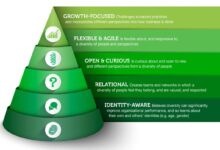
Inclusive leadership is a behaviorally observable, research-validated leadership style characterized by four core competencies: commitment (to equity and belonging), courage (to challenge bias and speak up), cognizance of bias (self-awareness of one’s own blind spots), and curiosity (a genuine desire to understand others’ perspectives). A landmark 2017 study by Deloitte and the Centre for Inclusive Leadership found that leaders scoring high on all four dimensions drove 17% higher team performance and 2.3x greater innovation outcomes. Crucially, inclusive leadership is learnable—not an innate trait.
Diversity as a Multi-Dimensional, Dynamic System
Diversity extends far beyond demographic categories like race, gender, or age. It includes experiential diversity (e.g., military service, neurodivergence, socioeconomic background), cognitive diversity (problem-solving styles, information processing preferences), and organizational diversity (tenure, function, geography). As Harvard Business Review emphasizes, teams with cognitively diverse members solve complex problems 60% faster. Yet diversity without inclusion is not just ineffective—it’s actively harmful: a 2022 MIT Sloan study revealed that employees in diverse but non-inclusive environments reported 2.6x higher burnout and 3.1x greater intent to leave.
Why the Intersection Is Non-Negotiable
Inclusive Leadership and Diversity are symbiotic. Diversity provides the raw material—different perspectives, experiences, and ideas. Inclusive leadership provides the catalytic environment where that material transforms into strategic value. Without inclusion, diversity becomes performative data; without diversity, inclusion lacks the friction necessary for growth. As Verna Myers, VP of Inclusion Strategy at Netflix, powerfully states:
“Diversity is being invited to the party. Inclusion is being asked to dance. Equity is being given the chance to plan the playlist—and own the DJ booth.”
The Tangible Business Case: ROI, Retention, and Resilience
When executives ask, “Why invest in Inclusive Leadership and Diversity?” the answer isn’t just moral—it’s financial, operational, and existential. The evidence is robust, longitudinal, and cross-industry.
Revenue and Innovation Lift
McKinsey’s 2023 Diversity Matters report analyzed over 25,000 companies across 112 countries and found that organizations in the top quartile for ethnic and cultural diversity were 36% more likely to outperform peers on profitability. Even more compelling: companies with above-average gender diversity on executive teams were 25% more likely to achieve above-average profitability. This isn’t correlation—it’s causation driven by cognitive friction. Diverse teams challenge assumptions, surface blind spots in product design (e.g., facial recognition algorithms failing on darker skin tones), and identify unmet market needs—like the $1.2 trillion global ‘she-economy’ or accessibility-first tech for 1.3 billion people with disabilities.
Retention, Engagement, and Cost Savings
Turnover is expensive—up to 213% of an employee’s annual salary for senior roles (Center for Creative Leadership). Inclusive Leadership and Diversity directly mitigate this. A 2024 Gartner study showed that inclusive teams experience 56% lower turnover than non-inclusive counterparts. Why? Because inclusion satisfies three fundamental human needs: autonomy (voice in decisions), competence (access to growth), and relatedness (authentic connection). When those needs are met, engagement soars—and disengagement plummets. Salesforce’s 2023 Equality Report revealed that after implementing mandatory inclusive leadership training and pay equity audits, voluntary attrition among underrepresented groups dropped by 32% in two years.
Resilience in Crisis and Hybrid Complexity
During the pandemic, companies with strong inclusive leadership practices were 2.8x more likely to maintain high levels of employee well-being and decision-making speed (Boston Consulting Group, 2022). Why? Inclusive leaders foster psychological safety—the bedrock of adaptability. Teams where members feel safe to admit mistakes, ask ‘dumb’ questions, or propose unconventional ideas recover faster from disruption. In hybrid and remote settings, inclusive leaders proactively design for equity: rotating meeting times across time zones, using asynchronous documentation as the ‘source of truth’, and ensuring virtual participants have equal airtime—practices that prevent the ‘proximity bias’ that disadvantages remote workers.
7 Evidence-Based Strategies to Embed Inclusive Leadership and Diversity
Building Inclusive Leadership and Diversity requires moving beyond one-off workshops to systemic, sustained intervention. These seven strategies are grounded in organizational psychology, behavioral science, and real-world implementation data from companies like Unilever, Accenture, and the UK Civil Service.
1. Audit Leadership Behaviors—Not Just Headcounts
Most DEIB efforts start with demographic dashboards. But the real leverage point is leadership behavior. Conduct a 360-degree Inclusive Leadership Assessment using validated tools like the Inclusive Leadership Index (ILI) or the Catalyst Inclusive Leadership Assessment. Measure not just intent (“I value diversity”) but observable actions:
- Do leaders consistently solicit input from quieter team members in meetings?
- Do they publicly credit ideas from junior or underrepresented colleagues?
- Do they interrupt bias in real time—e.g., correcting ‘he’ assumptions in project briefings or challenging ‘culture fit’ language in hiring?
This data reveals where leadership development is needed—not where to place diversity hires.
2.Redesign Talent Systems End-to-EndInclusive Leadership and Diversity cannot thrive in systems designed for homogeneity.Audit every talent touchpoint: Recruiting: Use structured interviews with standardized, role-relevant questions; implement blind resume screening for initial shortlisting; partner with HBCUs, disability-led job boards, and veteran networks—not just as ‘pipelines’ but as co-designers of your hiring process.Promotion: Replace subjective ‘potential’ assessments with calibrated, evidence-based criteria (e.g., “demonstrated ability to lead cross-functional projects with measurable outcomes”)..
Require diverse promotion panels and mandate bias mitigation training for all reviewers.Development: Sponsorship—not just mentorship—is critical.Sponsorship means actively advocating for high-potential talent from underrepresented groups for stretch assignments, high-visibility projects, and succession pipelines.A 2023 study in the Journal of Applied Psychology found sponsorship increased promotion rates for women of color by 47%..
3. Normalize Identity-Driven Conversations
Many leaders avoid discussions about race, gender, or disability, fearing missteps. But silence reinforces exclusion. Normalize identity with intentionality:
- Integrate inclusive language into all communications (e.g., “team members” not “guys,” “parental leave” not “maternity leave”).
- Train leaders to facilitate ‘identity-safe’ team check-ins—not asking “How are you?” but “What’s one thing you need to feel fully present today?”
- Create psychologically safe forums for sharing lived experience—like Unilever’s ‘Allyship Circles’—where leaders share their own learning journeys, including mistakes and growth.
As Dr. Ella Washington, author of The Purposeful Leader, notes:
“Inclusion isn’t about being perfect. It’s about being present, accountable, and relentlessly curious—even when it’s uncomfortable.”
4. Embed Equity in Performance Management
Performance reviews are rife with bias: halo/horn effects, recency bias, and affinity bias (favoring those similar to oneself). To align Inclusive Leadership and Diversity with evaluation:
- Require calibration sessions where managers compare ratings across teams to identify systemic disparities.
- Use behaviorally anchored rating scales (BARS) tied to specific, observable actions—not vague traits like “leadership presence.”
- Track and publish anonymized performance rating distributions by demographic group—then hold leaders accountable for equitable outcomes, not just intent.
A 2022 PwC study found that companies using calibrated, behavior-based reviews reduced promotion gaps between majority and minority groups by 41% within 18 months.
5. Leverage Data for Accountability—Not Just Reporting
Move beyond ‘DEIB dashboards’ that track participation. Instead, build inclusion metrics that measure outcomes:
- Inclusion Index: A composite score from pulse surveys measuring psychological safety, fairness in decision-making, and belonging.
- Equity Ratios: Promotion rate of Group A ÷ Promotion rate of Group B; Compensation ratio of Group A ÷ Compensation ratio of Group B.
- Leadership Sponsorship Index: % of high-potential talent from underrepresented groups assigned to stretch projects or executive sponsors.
Make these metrics visible to the board and tie 15–20% of executive compensation to improvement—just as you would with ESG or customer satisfaction targets.
6. Train for Micro-Inclusion—Not Just Macro-Awareness
Traditional unconscious bias training has a 0.01% effect size on behavior change (Harvard Business Review, 2021). What works is micro-inclusion training: practical, habit-based skills for daily interactions. Examples:
- Using ‘name + pronoun + role’ introductions in all meetings.
- Applying the ‘2-second rule’: pausing for 2 seconds after asking a question to invite quieter voices.
- Practicing ‘bias interrupters’—e.g., when someone says “She’s too aggressive,” reframe: “She’s assertive and decisive—traits we value in leaders.”
Accenture’s ‘Inclusive Behaviors’ program, focused on micro-actions, increased inclusive meeting practices by 68% in 12 months.
7. Build Inclusive Leadership into Your Leadership Pipeline
Don’t treat inclusion as an ‘add-on’ skill. Embed it into your core leadership competency model. At Microsoft, ‘Inclusive Leadership’ is one of five non-negotiable leadership principles—assessed in every promotion cycle. To operationalize:
- Define clear, observable behaviors for each leadership level (e.g., “Manager: Actively seeks dissenting views before finalizing decisions”).
- Integrate inclusive leadership into onboarding—e.g., new managers co-facilitate a team inclusion charter in their first 30 days.
- Create ‘Inclusion Impact Projects’ where emerging leaders design and implement a small-scale inclusion initiative (e.g., redesigning onboarding for neurodiverse hires), with mentorship and budget.
This ensures inclusion isn’t a ‘DEIB team’ responsibility—it’s how leadership is practiced.
Common Pitfalls—and How to Avoid Them
Even well-intentioned Inclusive Leadership and Diversity initiatives fail—not from lack of will, but from flawed design. Recognizing these traps is the first step to resilience.
Tokenism Masquerading as Inclusion
Tokenism occurs when one or two individuals from underrepresented groups are elevated to visible roles without changing systems—making them ‘representatives’ rather than empowered contributors. The antidote? Structural representation: ensure diverse talent exists at every level, not just the top. As Kimberlé Crenshaw’s intersectionality framework reminds us, inclusion must account for overlapping identities (e.g., Black women face distinct barriers not captured by ‘gender’ or ‘race’ alone).
Equity as a Zero-Sum Game
A pervasive myth is that advancing equity means disadvantaging majority groups. This is false—and dangerous. Equity means providing what each person needs to succeed. For example, flexible work policies benefit caregivers (disproportionately women), people with chronic illness, and neurodiverse employees—but they also increase autonomy and trust for all. Research from the Society for Human Resource Management shows that equitable policies boost overall employee satisfaction by 34%, not just for targeted groups.
Over-Reliance on Voluntary Participation
When inclusion training, ERGs, or allyship programs are optional, they attract the already converted—and leave the most influential (and often resistant) leaders unengaged. The solution? Mandatory, role-specific, and consequence-aware inclusion development. At Johnson & Johnson, inclusive leadership training is required for all people managers—and completion is tracked quarterly by HR and reviewed in leadership talent reviews.
Measuring What Matters: From Metrics to Meaning
You can’t improve what you don’t measure—but measuring the wrong things wastes energy and erodes trust. Move beyond vanity metrics to impact metrics.
Leading vs. Lagging Indicators
Lagging indicators (e.g., % diverse hires, promotion rates) tell you what happened. Leading indicators tell you what’s likely to happen—and where to intervene. Examples:
- Psychological Safety Score: % of team members who agree “If I make a mistake, it will be held against me” (reverse-scored).
- Inclusive Meeting Index: % of meetings where all attendees speak at least once, and no single person dominates >40% of airtime (measured via AI tools like Gong or Zoom analytics).
- Sponsorship Rate: # of stretch assignments offered to underrepresented talent ÷ total stretch assignments.
Qualitative Depth: The Power of Narrative
Numbers tell part of the story. Narrative tells the rest. Conduct quarterly ‘inclusion story circles’—small, confidential, facilitated sessions where employees share specific moments of inclusion (“When I felt truly heard”) and exclusion (“When I edited my idea to sound more ‘acceptable’”). These stories reveal systemic patterns no survey can capture—like how ‘collaboration’ expectations penalize introverted or non-native English speakers.
External Benchmarking and Transparency
Compare your inclusion metrics against industry peers—not to shame, but to learn. Publish an annual Inclusive Leadership and Diversity Impact Report (like Patagonia’s Our Footprint Report)—detailing progress, setbacks, and concrete next steps. Transparency builds credibility and accountability. When Salesforce published its first pay equity report in 2015—revealing a $3M gap they then closed—it sparked a global industry shift.
Global and Cultural Dimensions of Inclusive Leadership and Diversity
Inclusive Leadership and Diversity is not a Western export. Its expression must be locally rooted, culturally intelligent, and globally coherent. A ‘one-size-fits-all’ approach fails.
Decolonizing Inclusion Frameworks
Many inclusion models center individualistic, Anglo-American values (e.g., ‘speaking up’ as the gold standard). In collectivist cultures (e.g., Japan, Nigeria, Mexico), inclusion may manifest as group consensus, elder guidance, or indirect communication. Inclusive leaders must adapt:
- In Japan, ‘wa’ (harmony) is valued—so inclusion means creating space for consensus-building, not just debate.
- In India, caste and regional identity are critical dimensions often absent from global DEIB frameworks.
- In Brazil, racial identity is fluid and context-dependent—requiring nuanced, locally co-created definitions.
Language, Power, and Access
English-dominant global companies often exclude non-native speakers. Inclusive Leadership and Diversity demands linguistic equity:
- Provide real-time translation in global meetings.
- Allow asynchronous contributions in native languages, with professional translation.
- Train leaders to recognize ‘language privilege’—e.g., penalizing accents or ‘non-standard’ grammar as ‘unprofessional’.
A 2023 study by the Global Diversity Practice found that multilingual inclusion practices increased innovation output in global R&D teams by 29%.
Religious, Spiritual, and Worldview Inclusion
Religious inclusion is often overlooked—yet it’s foundational to belonging. This includes:
- Flexible scheduling for prayer, observance, and pilgrimage (e.g., Hajj, Diwali, Yom Kippur).
- Providing inclusive food options that respect halal, kosher, vegan, and allergy needs—not just as ‘accommodations’ but as standard practice.
- Creating spaces for reflection and silence—not just ‘wellness rooms’ but spiritually neutral zones for contemplation.
As the Pew Research Center notes, 84% of the world’s population identifies with a religious group—making spiritual inclusion a global imperative, not a niche concern.
Future-Proofing Inclusive Leadership and Diversity: AI, Gen Z, and Beyond
The landscape is shifting—faster than ever. The next frontier of Inclusive Leadership and Diversity must anticipate and shape these forces.
AI Bias and the Inclusive Leader’s New Mandate
AI tools (hiring algorithms, performance predictors, chatbots) amplify human bias at scale. Inclusive leaders must now be AI-literate:
- Require third-party bias audits for all AI tools used in talent decisions.
- Train leaders to interpret AI outputs critically—e.g., “This algorithm flags ‘low potential’—but what data trained it? Whose success was defined as ‘high potential’?”
- Establish ‘human-in-the-loop’ protocols where AI recommendations are reviewed by diverse panels before action.
As the EU’s AI Act mandates, high-risk AI systems must undergo rigorous fairness testing—making inclusive leadership a regulatory requirement, not just a best practice.
Gen Z’s Expectations: Inclusion as Table Stakes
Gen Z (born 1997–2012) is the most diverse generation in history—and the least tolerant of performative inclusion. They demand:
- Transparency in pay, promotion, and decision-making.
- Leadership that takes public, values-aligned stances on social issues (e.g., LGBTQ+ rights, climate justice).
- Work that aligns with purpose—and systems that reflect their values (e.g., sustainability, mental health, equity).
A 2024 Deloitte Global Gen Z & Millennial Survey found that 73% of Gen Z respondents would leave a job within two years if their employer failed to demonstrate commitment to societal well-being—including inclusive leadership.
Neurodiversity as a Strategic Imperative
Neurodiversity (autism, ADHD, dyslexia, etc.) is no longer a ‘special needs’ issue—it’s a talent strategy. Neurodiverse individuals bring exceptional pattern recognition, hyperfocus, and innovative problem-solving. Companies like JPMorgan Chase (Autism at Work program) report neurodiverse hires are 48% more productive in software testing roles. Inclusive Leadership and Diversity must evolve to include neuro-inclusion:
- Offering multiple ways to demonstrate competence (e.g., portfolio reviews instead of whiteboard interviews).
- Providing sensory-friendly workspaces and flexible communication norms.
- Training managers on neuro-affirming feedback (e.g., direct, concrete, and timely—no ‘reading between the lines’).
FAQ
What’s the difference between inclusive leadership and diversity and inclusion (D&I) programs?
Inclusive leadership is a leadership behavior—how individuals lead, listen, and empower daily. Diversity and inclusion (D&I) programs are organizational initiatives (e.g., ERGs, training, hiring goals). Inclusive leadership is the engine; D&I programs are the infrastructure. Without the engine, infrastructure stalls.
Can inclusive leadership be measured objectively?
Yes—through validated behavioral assessments like the Inclusive Leadership Index (ILI), 360-degree feedback on specific actions (e.g., “solicits input from all team members”), and inclusion metrics (e.g., psychological safety scores, promotion equity ratios). Subjective surveys alone are insufficient.
How do we hold senior leaders accountable for inclusive leadership?
Accountability requires three levers: (1) Measurement—track inclusion behaviors in performance reviews; (2) Consequence—tie 15–20% of executive compensation to inclusion metrics; (3) Transparency—publish progress (and setbacks) in annual reports. As McKinsey states: “Accountability is the single biggest differentiator between successful and stalled DEIB efforts.”
Is inclusive leadership only relevant for large corporations?
No—it’s critical for startups, nonprofits, and SMEs. Smaller organizations have less bureaucracy, making behavioral change faster. A 2023 study by the Small Business Administration found that startups with inclusive leadership practices secured 31% more venture funding and had 2.4x higher employee retention in their first five years.
How long does it take to see results from inclusive leadership initiatives?
Behavioral shifts in leaders can be observed in 3–6 months with intensive coaching and feedback. Cultural and systemic impact (e.g., promotion equity, innovation lift) typically takes 12–24 months—but early wins (e.g., improved psychological safety scores, reduced meeting dominance) build momentum. Patience, consistency, and data-driven iteration are key.
Building Inclusive Leadership and Diversity is not a destination—it’s a daily practice of courage, curiosity, and commitment. It demands that leaders move beyond empathy to action, beyond awareness to accountability, and beyond diversity as a metric to diversity as a multiplier of human potential. When inclusion is woven into the fabric of leadership—measured, rewarded, and modeled—it transforms organizations from places people work into communities where people thrive, innovate, and lead with purpose. The future belongs not to the most homogenous, but to the most humanly intelligent—and that intelligence is inclusive by design.
Further Reading: