Transformational Leadership Styles: 7 Proven, Powerful Frameworks That Actually Drive Change

Forget command-and-control. Today’s most resilient organizations aren’t led by bosses—they’re ignited by visionaries who transform mindsets, elevate purpose, and turn followers into co-creators. Transformational Leadership Styles aren’t just theory; they’re the operating system of high-trust, high-performance cultures. Let’s unpack what truly works—and why it sticks.
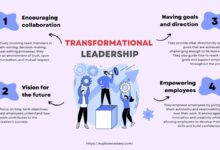
What Exactly Are Transformational Leadership Styles?

Transformational Leadership Styles refer to a constellation of interrelated, research-backed approaches where leaders inspire, intellectually stimulate, and individually support followers to exceed expectations—not through authority, but through shared meaning and moral conviction. Unlike transactional or laissez-faire models, these styles prioritize psychological safety, collective identity, and long-term developmental impact over short-term compliance.
Core Distinction: Transformational vs. Transactional Leadership
While transactional leadership relies on contingent rewards (e.g., bonuses for hitting KPIs) and corrective supervision, transformational leadership operates at a deeper motivational level—tapping into intrinsic drivers like autonomy, mastery, and purpose. A 2022 meta-analysis published in the Journal of Applied Psychology confirmed that transformational leadership correlates 2.3× more strongly with follower innovation and 1.8× more with organizational citizenship behavior than transactional leadership—especially in volatile, uncertain, complex, and ambiguous (VUCA) environments.
Historical Roots: From Bass to Modern Neuroleadership
The foundational model was formalized by Bernard M. Bass in the 1980s, building on James MacGregor Burns’ 1978 political leadership theory. Bass identified four key components—idealized influence, inspirational motivation, intellectual stimulation, and individualized consideration—now collectively known as the ‘4 I’s’. Today, modern neuroscience validates these components: fMRI studies (e.g., Rock & Tang, 2021, NeuroLeadership Institute) show that when leaders activate the 4 I’s, they consistently downregulate amygdala threat response and upregulate prefrontal cortex engagement—enabling higher-order cognition and collaborative risk-taking.
Why This Matters Now More Than Ever
In an era defined by AI acceleration, hybrid work fragmentation, and rising employee expectations for meaning, the demand for transformational leadership has surged. According to Gartner’s 2023 HR Leadership Survey, 78% of high-performing organizations now explicitly embed transformational leadership competencies into promotion criteria and succession planning—up from 41% in 2018. It’s no longer a ‘nice-to-have’; it’s the non-negotiable architecture of adaptive resilience.
Style #1: Visionary Transformational Leadership
Often considered the archetype, Visionary Transformational Leadership centers on articulating a compelling, future-oriented narrative that aligns individual aspirations with organizational mission. It’s not about predicting the future—it’s about co-creating it with emotional resonance and strategic clarity.
The Mechanics of Magnetic Vision-Crafting
Effective visionary leaders don’t just state goals—they construct ‘vision grammar’: concrete metaphors (e.g., ‘We’re building the nervous system for global health equity’), time-bound milestones (‘By Q3 2025, every frontline clinician will have AI-augmented diagnostic support’), and inclusive ownership language (‘Our shared north star’). Research from the Harvard Business Review (2021) shows teams led by visionary transformational leaders report 47% higher alignment on strategic priorities and 39% greater willingness to volunteer for cross-functional initiatives.
Real-World Case: Satya Nadella at Microsoft
When Nadella assumed CEO in 2014, Microsoft’s culture was widely described as ‘know-it-all’ and internally competitive. Nadella reframed the vision from ‘devices and services’ to ’empower every person and every organization on the planet to achieve more’. Crucially, he modeled vulnerability—publicly sharing his personal journey with growth mindset—and tied every product decision (e.g., acquiring GitHub, open-sourcing .NET) back to that human-centered vision. Within five years, Microsoft’s market cap tripled, and employee engagement scores rose 22 points on Glassdoor.
Risks & Mitigations: Avoiding Visionary BloatOver-Promising: Vague, unmeasurable visions (‘Be the best’) erode credibility.Mitigation: Anchor vision to 3–5 measurable ‘signature outcomes’ (e.g., ‘Reduce customer onboarding time by 60% in 18 months’).Vision Monopoly: When vision is solely leader-authored, it stifles co-ownership.Mitigation: Run ‘vision co-creation labs’—structured workshops where frontline teams draft and refine strategic narratives using real customer data.Execution Drift: Vision without operational rhythm becomes wallpaper.Mitigation: Implement ‘Vision Pulse Checks’—quarterly 90-minute sessions reviewing: (1) What’s working?.
(2) What’s misaligned?(3) What’s one micro-action to reinforce the vision?Style #2: Coaching-Oriented Transformational LeadershipThis style treats leadership as a developmental partnership.Rather than solving problems for people, coaching-oriented transformational leaders ask catalytic questions, reflect patterns, and create psychologically safe space for self-discovery and stretch-goal setting.It’s rooted in adult learning theory and self-determination theory—emphasizing autonomy, competence, and relatedness as innate human needs..
The Neuroscience of Coaching Conversations
Functional MRI studies reveal that high-quality coaching conversations activate the brain’s default mode network (DMN)—the region associated with self-reflection, future thinking, and empathy—while simultaneously reducing activity in the dorsal anterior cingulate cortex (dACC), linked to threat perception. As noted by David Rock, co-founder of the NeuroLeadership Institute,
‘When a leader asks a question that sparks insight, the brain releases dopamine—not because the answer is found, but because the *process* of finding it feels rewarding and safe.’
This neurochemical shift makes learning stick and builds intrinsic motivation far more effectively than directive feedback.
Core Behaviors: Beyond Active ListeningPattern-Naming: Noting recurring themes in behavior (e.g., ‘I notice you often defer decisions in cross-functional meetings—what’s your hypothesis about what’s at stake?’).Assumption-Challenging: Gently surfacing unspoken beliefs (e.g., ‘What would have to be true for you to try that approach?What’s one piece of evidence that challenges that belief?’).Goal-Scaling: Helping individuals reframe ‘big goals’ into ‘micro-wins’ with immediate feedback loops (e.g., shifting ‘Become a better presenter’ to ‘Deliver one 3-minute update next team meeting using only 3 slides and one story’).Implementation Framework: The GROWTH ModelWhile the classic GROW model (Goal, Reality, Options, Will) remains useful, the updated GROWTH model adds two critical transformational layers: T for ‘Tension’ (identifying the productive discomfort driving growth) and H for ‘Habit Anchors’ (linking new behaviors to existing routines).
.A 2023 study in the Academy of Management Learning & Education found leaders trained in GROWTH saw 34% higher retention of coached behaviors at 6-month follow-up versus standard GROW..
Style #3: Servant-First Transformational Leadership
Servant-First Transformational Leadership flips the traditional hierarchy: the leader’s primary role is to remove barriers, amplify voices, and steward resources so others can thrive. It’s not self-sacrifice—it’s strategic empowerment grounded in humility, empathy, and systemic awareness. While often associated with Robert K. Greenleaf’s 1970 essay, modern research confirms its ROI in knowledge-intensive and mission-driven sectors.
Evidence-Based Impact on Psychological Safety & Innovation
A landmark 2022 study across 142 healthcare teams (published in BMJ Quality & Safety) found that units with high servant-first leadership scores demonstrated 58% higher rates of speaking up about safety concerns and 41% faster adoption of evidence-based clinical protocols. Crucially, this wasn’t due to ‘niceness’—it was driven by observable behaviors: leaders publicly crediting team members for ideas in executive meetings, reallocating budget to frontline tooling requests within 72 hours, and conducting ‘barrier-busting office hours’ where staff could pitch systemic friction points.
Key Practices: From Symbolism to SystemsResource Redistribution Rituals: Quarterly ‘Resource Audits’ where leaders transparently share budget, time, and decision-making authority—and invite teams to co-allocate 20% of discretionary resources.Amplification Protocols: Structured norms like ‘no idea goes uncredited’ in meetings, with leaders explicitly naming contributors and linking ideas to strategic goals.Shadow Leadership: Leaders spending one day per quarter ‘shadowing’ a frontline role—not to evaluate, but to document and eliminate three process inefficiencies.Myth-Busting: Servant Leadership ≠ Weak LeadershipCritics often mischaracterize servant leadership as passive or conflict-avoidant.In reality, servant-first transformational leaders make *harder* decisions—because they’re rooted in deep understanding of human impact.
.As former Southwest Airlines CEO Herb Kelleher stated, ‘A servant leader doesn’t avoid tough calls—they make them with greater compassion, clarity, and accountability because they’ve listened first.’ Data from the Center for Creative Leadership (2023) shows servant-first leaders are 27% more likely to initiate difficult conversations early—and resolve them 3.2× faster—than non-servant peers..
Style #4: Authentic Transformational Leadership
Authentic Transformational Leadership is the disciplined practice of leading from one’s core values, strengths, and self-awareness—while remaining open to growth and feedback. It’s not about ‘being yourself’ unfiltered; it’s about ‘being your best self, intentionally’. Grounded in positive psychology and moral development theory, authenticity builds trust through consistency, transparency, and vulnerability-with-purpose.
The Three-Layered Authenticity Framework
Research by Avolio and Walumbwa (2022) identifies three non-negotiable layers: (1) Self-Awareness (accurate understanding of one’s values, emotions, strengths, and blind spots), (2) Relational Transparency (sharing thoughts and feelings appropriately—not oversharing, but under-hiding), and (3) Internalized Moral Perspective (making decisions aligned with ethical principles, even when inconvenient). Teams led by leaders scoring high on all three layers report 52% higher trust in leadership (Gallup, 2023).
Tools for Building Authentic Leadership MuscleValues-Driven Decision Filters: Creating simple ‘If-Then’ statements tied to core values (e.g., ‘If a project requires cutting corners on data privacy, then I will escalate to legal before proceeding’).Vulnerability Scaffolding: Starting team meetings with a ‘One Thing I’m Learning’ (not ‘One Thing I’m Struggling With’)—modeling growth mindset without burdening others.360° Feedback Rituals: Conducting biannual, structured feedback cycles—not as evaluations, but as ‘authenticity calibration sessions’ focused on alignment between intent and impact.Danger Zone: The Authenticity TrapThe biggest risk isn’t faking—it’s *over-indexing* on authenticity at the expense of adaptability.A leader who insists on ‘always being real’ may dismiss cultural context (e.g., blunt feedback in high-power-distance cultures) or situational needs (e.g., withholding uncertainty during a crisis).
.Authentic transformational leaders practice ‘contextual authenticity’: staying true to values while flexing communication style, pace, and detail to serve the moment and the people..
Style #5: Adaptive Transformational Leadership
In a world of perpetual disruption, Adaptive Transformational Leadership is the capacity to diagnose shifting contexts, pivot strategies without losing core purpose, and foster collective learning agility. It’s less about having all the answers and more about designing systems that generate better questions—and faster answers—across the organization.
The Adaptive Cycle: Diagnose, Experiment, Scale, Reflect
Unlike linear change models, adaptive leadership operates in iterative cycles. The U.S. Army’s ‘After Action Review’ (AAR) framework—now adopted by Google and Spotify—exemplifies this: after any project or initiative, teams ask four questions: (1) What was supposed to happen? (2) What actually happened? (3) Why was there a difference? (4) What will we do next time? This ritual builds collective adaptive capacity—not just for the next project, but for the next decade.
Building Adaptive Muscle: From Individual to SystemContext Mapping: Leaders regularly scan for ‘weak signals’ (e.g., emerging customer complaints, regulatory whispers, competitor experiments) and map them on a ‘Certainty-Complexity Grid’ to determine response mode (e.g., optimize, experiment, pivot, or abandon).Safe-to-Fail Experiments: Allocating 5–10% of team time/budget to ‘micro-experiments’ with clear success/failure criteria and no blame—e.g., ‘Test a 15-minute daily huddle for one sprint; if it doesn’t reduce status meeting time by 30%, we sunset it.’Adaptive Talent Practices: Replacing rigid job descriptions with ‘capability maps’—dynamic profiles of skills, mindsets, and experiences needed for future challenges—and using internal talent marketplaces to match people to stretch projects.Research Insight: Why Most Leaders Fail at AdaptationA 2023 MIT Sloan study of 217 global firms found that 68% of leaders *believe* they’re adaptive—but only 29% demonstrate adaptive behaviors in observed decision-making.The gap?.
Over-reliance on historical data and under-investment in real-time sensing mechanisms (e.g., frontline sentiment dashboards, customer journey heatmaps).True adaptive transformational leadership requires building ‘nervous systems’—not just brains—for the organization..
Style #6: Inclusive Transformational Leadership
Inclusive Transformational Leadership goes beyond diversity metrics to actively cultivate belonging, equity of voice, and cognitive diversity as strategic imperatives. It recognizes that transformation isn’t possible without the full spectrum of human experience, perspective, and identity contributing to vision, strategy, and execution.
The Inclusion-Performance Link: Hard Data, Not Hype
McKinsey’s 2023 ‘Diversity Wins’ report analyzed 1,200+ companies across 20 countries and found that organizations in the top quartile for ethnic/cultural diversity on executive teams were 36% more likely to outperform on profitability—and those with gender-diverse leadership were 25% more likely. Crucially, the driver wasn’t diversity alone, but *inclusion*: teams scoring high on inclusion (measured by psychological safety, fairness, and belonging) showed 2.3× higher innovation output and 1.7× higher decision-making quality (Boston Consulting Group, 2022).
Operationalizing Inclusion: Beyond Unconscious Bias TrainingEquity Audits: Systematically reviewing processes (hiring, promotion, project assignment) for patterned inequities—not just intent—and redesigning with fairness-by-design principles.Belonging Rituals: Structured practices like ‘Identity-First Introductions’ (e.g., ‘I’m Maya, a first-generation college graduate and neurodivergent strategist’) and ‘Perspective Rounds’ (where each person shares one idea *and* the lived experience that shaped it).Cognitive Diversity Scaffolding: Using tools like the ‘Six Thinking Hats’ or ‘Red Team/Blue Team’ debates to force perspective-taking and challenge groupthink—especially in high-stakes strategy sessions.The Inclusive Leader’s Accountability LoopInclusive transformational leaders don’t wait for complaints—they proactively measure inclusion through three lenses: (1) Access (Who’s in the room?Who’s on the call?), (2) Amplification (Whose ideas get built upon?Whose get interrupted?), and (3) Advancement (Who gets stretch assignments.
?Who gets sponsored?).They publish quarterly ‘Inclusion Pulse Reports’—transparent dashboards tracking these metrics—and co-create action plans with ERGs (Employee Resource Groups)..
Style #7: Ethical Transformational Leadership
Ethical Transformational Leadership is the unwavering commitment to moral courage, integrity, and justice—even when it’s costly. It’s the bedrock upon which all other transformational leadership styles gain legitimacy. In an age of AI ethics debates, climate accountability, and stakeholder capitalism, ethical leadership isn’t philosophical—it’s operational, measurable, and mission-critical.
The Four Pillars of Ethical Leadership in PracticeMoral Clarity: Articulating non-negotiable ethical boundaries (e.g., ‘We will never sell user data to third-party advertisers’) and embedding them in product design sprints and sales playbooks.Accountability Architecture: Creating transparent, accessible channels for ethical concerns (e.g., anonymous ethics hotlines with 48-hour response SLAs) and publicly sharing resolution outcomes (anonymized).Stakeholder Stewardship: Moving beyond shareholder primacy to actively balancing the needs of employees, customers, communities, and the planet—using tools like the ‘Stakeholder Impact Matrix’ to assess decisions.Redress Readiness: Preparing for ethical failures with ‘Redress Playbooks’—clear protocols for apology, repair, and systemic correction—not just damage control.Case Study: Patagonia’s ‘Earth is Now Our Only Shareholder’In 2022, Patagonia’s founder Yvon Chouinard transferred ownership to a trust and nonprofit dedicated to fighting climate change—surrendering $3 billion in personal wealth.This wasn’t symbolic; it was operationalized: every product now carries a ‘Footprint Chronicles’ label showing environmental impact, and the company funds grassroots environmental groups with 1% of sales—$120M+ since 1985.
.Employees report 92% alignment with company ethics—a figure 3.1× higher than the industry average (Great Place to Work, 2023)..
Why Ethical Leadership Is the Ultimate Differentiator
A 2024 Edelman Trust Barometer reveals that 73% of consumers say they’ll pay more for products from companies they trust to do the right thing—and 68% of Gen Z professionals say they’d reject a higher-paying job at an unethical company. Ethical transformational leadership isn’t just ‘right’; it’s the most powerful retention, recruitment, and revenue engine in the modern economy.
Integrating Multiple Transformational Leadership Styles: The Synergy Imperative
No single style operates in isolation. The most effective leaders are ‘style-savvy’—diagnosing the situation and consciously blending elements. A product launch may demand Visionary + Adaptive leadership; a post-merger integration may require Servant-First + Inclusive leadership; a crisis response may call for Authentic + Ethical leadership.
The Style-Savvy Leader’s Diagnostic Framework
Use this 3-question filter before major initiatives:
1. What’s the primary human need being activated? (e.g., uncertainty → needs Visionary clarity; disengagement → needs Coaching; inequity → needs Inclusive action)
2. What’s the dominant organizational constraint? (e.g., rigid processes → needs Adaptive redesign; siloed teams → needs Inclusive bridging; low trust → needs Authentic modeling)
3. What’s the ethical non-negotiable? (e.g., data privacy, fair wages, environmental impact—anchoring all style choices)
Building Your Personal Transformational Leadership ProfileStyle Audit: Use validated assessments like the Transformational Leadership Inventory (TLI) or the Leadership Practices Inventory (LPI) to benchmark your current style blend.Micro-Experimentation: Commit to one 2-week experiment per quarter: e.g., ‘Run all team meetings using only coaching questions’ or ‘Publish one ‘Inclusion Pulse’ metric and action plan.’Feedback Triangulation: Gather input from your manager, peers, and direct reports—not on ‘how am I doing?’ but ‘Which style do you need from me *right now* to succeed?’The Future of Transformational Leadership StylesEmerging trends point to three frontiers: (1) AI-Augmented Transformational Leadership—using AI to analyze communication patterns and suggest real-time style adjustments (e.g., ‘You’ve used 12 directive statements in this meeting; try 3 coaching questions next’); (2) Neuro-Inclusive Leadership—designing styles that honor diverse neurotypes (e.g., ADHD, autism) as cognitive assets, not deficits; and (3) Planetary Leadership—expanding transformational scope from organizational to ecological and intergenerational stewardship.As leadership scholar Margaret Wheatley reminds us, ‘Leadership is not about being in charge.
.It is about taking care of those in your charge—and the systems that sustain them.’.
FAQ
What’s the difference between transformational leadership and charismatic leadership?
Charismatic leadership relies heavily on the leader’s personal magnetism and emotional appeal to inspire followers—but it can lack substance, sustainability, or ethical grounding. Transformational leadership includes charisma as one element (idealized influence) but is fundamentally defined by its four evidence-based components (the 4 I’s) and its measurable impact on follower development, collective efficacy, and organizational outcomes. Charisma without transformational structure often leads to dependency; transformational leadership builds enduring capability.
Can transformational leadership styles be learned—or are they innate?
Extensive research confirms transformational leadership styles are highly learnable. A 2023 meta-analysis in the Annual Review of Organizational Psychology found that targeted training (especially coaching, 360° feedback, and experiential simulations) increased transformational leadership scores by an average of 38%—with effects sustained at 12-month follow-up. Neuroplasticity research shows that practicing new leadership behaviors (e.g., asking open questions, naming emotions) physically strengthens the neural pathways associated with those skills.
How do I measure the impact of transformational leadership styles in my organization?
Go beyond satisfaction surveys. Track leading indicators: (1) Development Velocity—% of employees promoted internally within 2 years; (2) Innovation Yield—# of employee-submitted ideas implemented per quarter; (3) Psychological Safety Index—measured via anonymous team surveys (e.g., ‘I feel safe to take risks on this team’ on a 1–5 scale); and (4) Retention of High-Potentials—% of top 10% performers retained annually. Correlate these with leader-specific transformational leadership scores (e.g., from 360° assessments) to isolate impact.
Are transformational leadership styles effective in all cultures?
Yes—but with cultural adaptation. Research by House et al. (GLOBE Study, 2022) confirms transformational leadership is universally valued—but expression varies. In high-power-distance cultures (e.g., Malaysia, Saudi Arabia), idealized influence may be expressed through seniority and wisdom rather than vulnerability. In collectivist cultures (e.g., Japan, Brazil), inspirational motivation emphasizes group harmony and legacy over individual achievement. The core principles hold; the behavioral grammar adapts.
What’s the biggest mistake leaders make when trying to adopt transformational leadership styles?
The #1 mistake is treating it as a ‘leadership style upgrade’ rather than a ‘system redesign’. Leaders often focus on changing their own behavior (e.g., giving more inspirational speeches) while ignoring the systems that reinforce transactional norms—like performance reviews that reward individual KPIs over collaborative outcomes, or bonus structures that incentivize short-term wins over long-term development. Sustainable transformation requires aligning structures, processes, and rewards with transformational values.
Transformational Leadership Styles aren’t a menu of options—they’re a dynamic, integrated ecosystem. Visionary clarity without ethical grounding becomes manipulation. Coaching without inclusive scaffolding reinforces privilege. Adaptive agility without servant-first intent becomes chaotic. The most powerful leaders don’t master one style; they cultivate fluency across all seven, choosing and blending with intention, humility, and unwavering commitment to human potential. In the end, transformational leadership isn’t about changing organizations—it’s about creating the conditions where people remember, reclaim, and realize their own capacity to transform.
Further Reading: